QUESTION: Calculate the mass of CO2 produced by a small car in one year?
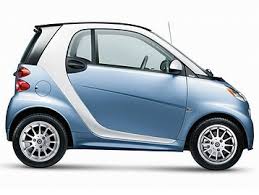
Smart (Mercedes-Benz). Motor 1.0 L, 70 hp, mass: 830 kg
|
| DATA and INFORMATION |
| Data |
Fuel consumption: 7.0 L / 100 km
Distance: 12 000 km / year
Gasoline: Octane (density = 0.702 g / mL)
- Combustion is a reaction with oxygen.
- The complete combustion of octane produces carbon dioxide and water
- Assume the %yield of the reaction to be 100%
|
| SOLUTION (All the calculations are for 1 year) |
| Balanced chemical equation |
2C8H18(l) + 25O2(g) → 16CO2(g) + 18H2O(g)
|
| Volume of octane consumed |
| volume octane = 12 000 km X |
7.0 L |
| 100 km |
|
| Mass of octane consumed |
| mass octane = 840 L X |
702 g |
| L |
|
| Mole of octane consumed |
| Mole octane = 5.90 x 10⁵ g X |
1 mole octane |
| 114.2 g octane |
|
| Mass of CO2 produced |
| mass CO2 = 5.17x10³ mole octane X |
16 mol CO2 |
| 2 mol C8H18 |
| = 1.82x10⁶ g or 1.8 ton CO2 |
|
| |
|
| ANSWER: 1.8 ton CO2 / year is produced by a small car, which is more than twice the mass of the car itself. |